
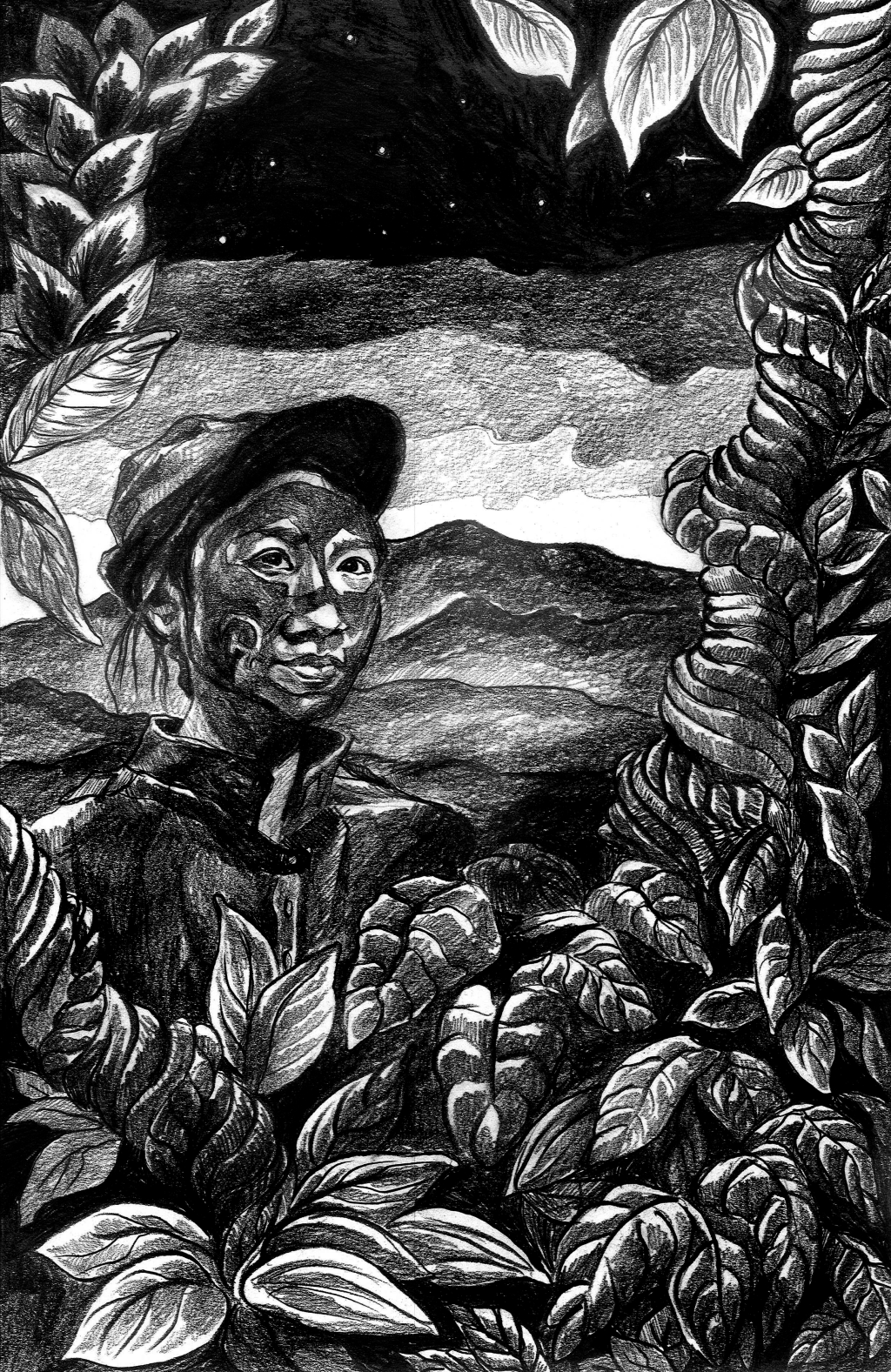
GATT pamphlet series, published for May Day 2025
Click here to download a PDF for distribution.
The Philippines is rich, but the people are poor. The country is an archipelago, a group of islands, that is rich in natural resources, mineral wealth, and agricultural products. These thousands of islands sit in the Pacific Ocean at the mouth of the South China Sea, making the Philippines a historically important location of naval and trade activity. Despite the immense wealth of natural resources and agriculturally productive lands, millions of Filipinos are forced to leave the country every year simply to find work. Inside the Philippines, nearly twenty million Filipinos live in poverty, earning 200 US dollars or less a month for a family of five.
For more than fifty years, Filipinos have taken up arms against their own government to fight this rotten state of affairs. In the country’s farthest reaches, among sugarcane pickers, fisherfolk, and rural indigenous people, they have waged a revolution. This revolution has defended the people against brutal exploitation, punished landowners and corrupt officials, and even established pockets of new political power, allowing some of the poorest and most exploited people on the planet to have a say in running their own lives.
Far across the Pacific Ocean, the United States government has declared that these revolutionaries are terrorists. For more than fifty years, the US-backed Philippine government has fought against the revolution, kidnapping, torturing, and assassinating its fighters and leaders. Every successive Philippine president has promised to end the revolution. All have failed. The revolutionary fighters are part of the New People’s Army, led by the Communist Party of the Philippines. This pamphlet gives a brief introduction to their history and struggle.
Malcolm X once said that “You can’t understand what is going on in Mississippi if you don’t understand what is going on in the Congo.” There are lessons to be learned everywhere that people are fighting back against their oppressors, especially when they are taking up arms and fighting for a new society. If we want to make revolution in the US, we can learn a lot from people trying to make revolution in countries oppressed by US imperialism.
Imperialism and resistance
The history of resistance in the Philippines runs deep. In the 16th century, the famed “explorer” (actually a murderer and plunderer) Ferdinand Magellan met his end in the Philippines at the hands of Lapulapu, a tribal leader who refused to swear loyalty to a European king. The Spanish were eventually able to colonize the islands, naming the land the Philippines after their King Phillip. Spain wielded both military force and the imposition of Catholicism. Catholicism was particularly useful to colonial rule, as it provided a unifying ideology across the many islands and different languages of the Philippines that imposed fealty to the Spanish crown. The religion came with a ready-made social hierarchy that was used to divide up agricultural lands: feudalism.
As part of colonialism, the imposition of direct rule and domination, imperial Spain imposed the feudal system on the Philippines, dividing the land into large estates and plantations (originally controlled by the Catholic Church) and turning the majority of Filipinos into peasants, who had to do backbreaking agricultural work to produce goods that they didn’t get to consume, on land they didn’t own.
It was in the process of Spanish colonialism and the ceaseless resistance to that colonialism that the idea of the Philippines as a nation and the Filipinos as a unified people was born. The brutality of Spanish domination was met at first by local revolts and then by national revolts. Eventually, some Filipinos went to Europe to study and write, and some used the education they received to advocate for reforms or more rights within the Spanish system. Others took a more revolutionary approach, demanding independence from Spain.
By the end of the 19th century, the Spanish colonial empire was well along the path of decline, and Filipino revolutionaries were able to strike decisive blows against Spanish rule. At the same time, US imperialism was on the rise, and the US ruling class took advantage of the national liberation struggle in the Philippines to assert their “right” to dominate the Philippines. The US fought Spain in the Philippines, claiming that they were siding with the Filipinos, only to betray the Philippines and eventually “buy” the country from Spain, alongside Puerto Rico, Guam, and Cuba.
Filipinos resisted the US domination of their country for three years in a bloody war that left more than one million Filipinos dead. In the Southern part of the country, on the islands of Mindanao and Sulu, the indigenous Moro Muslim people resisted for another decade. In those areas, the agents of US imperialism were so brutal that they invented the waterboarding method of torture, which the US used elsewhere a century later during the Bush administration’s so-called “war on terror” in the 2000s. The US dominated the Philippines for decades in the early 1900s, first through direct rule and then by setting up a puppet government. Then as part of World War II, the Japanese invaded the Philippines.
While promising an alternative to Western imperialism, the Japanese occupation of the Philippines was in fact extraordinarily brutal. Like in other parts of Asia occupied by the Japanese, dissidents were beheaded, villages were burned, and thousands of women were kidnapped and forced into sexual slavery. The main resistance to the Japanese occupation didn’t come from the US or the puppet government it had installed in the Philippines; it came from a communist-led guerrilla movement. While the communists did the bulk of the fighting, their own mistakes, as well as opportunist maneuvering by the US, led to the US retaking the Philippines after defeating Japan in the war. The US worked with the Filipino elite, especially the large landowners, to reconfigure the Philippines as a country that was formally free but in reality dominated by US imperialism.
Revolutionary warfare and martial law
The whole setup of Philippine society after WWII was beneficial only for a small group of elites: the local ruling class and their foreign masters, the US bourgeoisie. Vast tracts of agricultural lands remained in the hands of a small number of landowning families, who brutally exploited the peasants who worked for them, not growing food to feed the people but rather for sale on the market. Favorable trade conditions for US corporations were written into Philippine law, and industrial development was funded only insofar as it made profits for corporations headquartered in the US and other imperialist countries. This system was personified by the dictator Ferdinand Marcos, who became the president of the Philippines in 1965 and ruled over the masses with brutal repression.
Marcos committed many crimes against the Filipino people while enriching himself and his family, and he is perhaps best remembered for his wife’s massive collection of designer shoes. Those shoes illustrate the obscene amount of money the Marcos family stole from the extremely poor masses through graft and corruption, all while doing the bidding of US imperialism. Marcos even allowed US troops to base in the Philippines while the US was waging an imperialist war of aggression against the people of Vietnam.
Up against the corrupt Marcos government and the rotten social system, the people of the Philippines joined the worldwide revolt of the 1960s. In the Philippines, that revolt began with militant students and young people and quickly spread to other sectors of society, including women and progressive members of the Catholic Church. The most radical of those students began to study the experiences of revolutionary movements in other countries, especially the Chinese Revolution led by Mao Zedong that established a socialist society in 1949, run by the masses of people and on the road towards communism. Inspired by the leadership of Mao and the successes of the Chinese Revolution, these Filipino revolutionaries, led by a young teacher named Jose Maria Sison (affectionately known as Joma), established the Communist Party of the Philippines (CPP) in 1968.
The goal of the CPP was not another shake-up of the same rotten system. They were fighting for revolution, not just reforms. Revolution in the Philippines aims to create a whole new social and economic system, where the large agrarian estates will be taken from the wealthy landowners and put in the hands of the people who work the land, where the property of the ruling class is seized and put to use for the people, and where all foreign imperialists are driven out and the country’s natural resources and human labor are used to benefit the masses in the Philippines rather than the profits of foreign corporations. This is the socialist system that the CPP is still fighting for to this day—a system where those who are right now exploited and oppressed run society.
Joma Sison and the CPP knew that student protests in the cities, no matter how militant, wouldn’t be enough to overthrow the ruling class. They had to link up with the exploited peasants in the countryside and build bases for rural guerrilla warfare. They joined with a group of fighters who been part of the anti-Japanese resistance and founded the New People’s Army (NPA) in 1969, with the goal of building up bases of people’s political power and surrounding the big cities like Manila from the countryside. This strategy, developed by Mao during the Chinese Revolution, is called protracted people’s war.
The NPA made quick advances in the first few years of launching protracted people’s war, going from a few guerrilla units in one province to numerous fronts of guerrilla warfare across the Philippines and the revolution sinking roots among the masses in the countryside. In response to the growth of the armed revolution, President Marcos declared martial law in 1972. Anyone who spoke out against his government could be imprisoned, elections were canceled, and the news was heavily censored. In the face of martial law, the CPP and the NPA recruited many of the people who fled Manila and other cities to escape intensified repression into the ranks of the revolution, deploying them to the countryside to expand guerrilla warfare against the US-backed Marcos dictatorship.
Despite the brutality of the Marcos government, the revolution was able to grow across the many islands that make up the Philippines. But no revolution is ever able to proceed in a straight path. There are always new challenges to confront, and always a need to struggle over the correct path forward. By the late 1970s and early 1980s, many in the CPP were trying to figure out how to go from strong rural bases to seizing nationwide power. Unfortunately, many of the ideas they came up with involved abandoning the communist principles of the CPP. Some wanted to work in collaboration with members of the Filipino ruling class, such as the Aquino family, who were opposed to Marcos and martial law for their own, self-interested reasons. Others sought out support from the Soviet Union, a country that had once been socialist but by the late 1950s had become capitalist and by the 1970s was an imperialist power opportunizing on national liberation struggles around the world for its own, bourgeois interests. These and other “quick victory” schemes weakened the CPP’s ability to lead the masses in revolutionary struggle. When a large protest movement against the Marcos government and martial law emerged in the mid-1980s, the CPP was unable to divert that movement towards the revolutionary overthrow of not just Marcos, but the entire ruling class. Marcos was forced to step down in 1986 and martial law was ended, but the system of feudal and capitalist exploitation and foreign domination that ruled over the masses in the Philippines remained, just with a new figurehead as president and a temporary relaxation of repression.
Recognizing its errors and departures from firm revolutionary principles in the 1980s, the CPP launched a rectification movement in 1992 to get decisively back on the revolutionary road. On the basis of that rectification movement, the CPP has worked to rebuild the NPA as a fighting force and lead the masses of exploited and oppressed people in new rounds of revolutionary struggle.
The Philippines today
Since the fall of Marcos in 1986, there have been many changes in the world and Philippine society.Presidents have come and gone and reforms have been instituted, but none of these reforms or changes in government personnel have altered the fundamental reality that drives the NPA to continue fighting. The Philippines is still dominated by foreign powers, especially US imperialism. The Filipino people still suffer under conditions of brutal exploitation, whether working in the countryside or in the cities.
Many of the reforms that have been implemented by post-Marcos Philippine presidents have served to continue the oppression of the people. For example, while there have been a number of land reform laws passed seeking to break up the large plantations and agricultural estates, these reforms have mainly empowered the landowners and their allies. In the sugarcane-growing regions of the country, the workers cutting the cane receive wages, set by the government, so low that they can only eat just above what they need not to starve. In 2004, workers at one of the largest sugarcane plantations in the Philippines, Hacienda Luisita, went on strike, demanding a wage increase. At the time, they were making less than one US dollar a week for backbreaking labor. That hacienda was owned in part by members of the Aquino family, a prominent family in the liberal wing of the ruling class. When the police came to break up the strike, they fired live ammunition at the unarmed crowd, killing seven people.
Social and economic factors have forced many people in the Philippines to move, either from the countryside to Manila and other cities, or out of the country altogether. The government has a systematic policy of labor export: sending people to work outside of the country for foreign companies, breaking their families apart, and taxing the money that overseas Filipinos send home to their families in the Philippines. Overseas Filipino workers labor in factories, as domestic workers, on ships, and especially in healthcare. Those who remain in the Philippines scramble to find work to feed their families, and many are forced to move in between formal employment and informal hustles to survive. Much of the work available to proletarians in the Philippines is contractual: their job is “bought” through a broker on a short-term contract, without benefits, legal protections, or the possibility of annual wage increases.
New forms of imperialist exploitation are encroaching on other longstanding ways of life in the country. Many Filipinos are forced to find work in export processing zones, where goods are produced not for the needs of the Filipino people, but for sale on the global market. For example, pharmaceutical companies headquartered in the US and other imperialist countries outsource the industrial production of medications to the Philippines, where factory workers are paid a pittance and the Filipino masses cannot afford the very medications they mass produce.
Nearly half of the eleven million people in Manila live in slums: in ramshackle conditions, near dumpsites or busy roads, all without access to regular utilities or sanitation. Many indigenous people have been forced off of the lands they traditionally live on by large mining and agricultural corporations, and the schools they’ve established to pass on their languages and culture have been closed by the government.
While official US military bases were removed from the Philippines in 1992 due to militant protests, US soldiers remain stationed in Philippine military bases. Anywhere in the world the US military extends its insidious imperial presence, brothels spring up to serve US soldiers. All too many Filipina women and girls are exploited in the sex trade, for US soldiers and for the grotesque “sex tourism” industry. These women face pervasive violence up to and including murder, as in the case of Jennifer Laude, a trans woman who was killed by a US soldier in 2014.
The revolution today
None of this bitter exploitation and oppression of the Filipino people and their domination by foreign imperialism can be ended without a revolution. For more than fifty years, the NPA has been waging that revolution. While carrying out actions to punish the worst oppressors and tactical offensives against the Philippine army and police, the NPA also deeply integrates with the masses, learning about their conditions of life and aspirations, providing medical care for them, taking part in production alongside them, and training them to understand and change the world. Where the NPA is active, they have led the masses to seize land for themselves and drive out oppressive landowners. While in mainstream Philippine society patriarchy (the domination of women by men) prevails, in the NPA women and men are treated equally, with many women becoming prominent revolutionary fighters and leaders. Same-sex marriages are performed in the NPA, and LGBTQ people have full equality within the revolutionary movement, whereas LGBTQ are discriminated against in Philippine society more generally.
While the NPA has entered into negotiations with the Philippine government over the years, and even agreed to periods of ceasefire, it has always refused to put down its guns, as doing so would be tantamount to betraying the people. Even though they now have to face down high-tech counterrevolutionary warfare by an enemy equipped with drones in addition to helicopters, the NPA has persisted in fighting for the Philippine masses and to overthrow imperialist domination.
Daily life in the NPA is difficult and inspiring. The revolutionaries wake up before dawn to exercise, and must always be prepared to attack the enemy, defend themselves, or move quickly as the situation demands. When they are on the move, they can only eat what the masses of people provide for them. The NPA and the masses who support it continue to endure surveillance, indiscriminate aerial bombings, kidnapping, and torture at the hands of the US-backed Philippine government. Yet they persist in fighting, including being willing to make the ultimate sacrifice of their own lives in the fight against their oppressors and to bring into being a new world free of oppression.
The idea of people leaving their regular lives to pick up arms and fight for a better world seems foreign to people in the US, where even the lower classes have some of the conveniences of life that imperialism provides by exploiting people around the world. Yet don’t we need to make revolution here in the belly of the beast, just like the people of the Philippines do? Don’t we have a responsibility to stand with the people of the Philippines, and other countries oppressed and dominated by US imperialism, by overthrowing the imperialist power that is preventing them from determining their own destiny? And aren’t there millions of people in the US who are bitterly oppressed and exploited, from the two million people rotting inside the hellholes that are US prisons, to the people doing backbreaking labor in meatpacking plants, agricultural fields, and warehouses, to the women who are subjected to the daily violence of sexual assault, to the hundreds of people gunned down in cold blood by the police every year? Couldn’t these people be organized to make revolution?
The US is a very different country than the Philippines, and it’s not possible to go to the countryside and begin guerrilla warfare here. But to make a revolution in the US, we would need many people who have dedication and spirit like the Philippine revolutionaries in the NPA. We are lucky to have an organization in the US, the Organization of Communist Revolutionaries (OCR), that is working hard on developing, testing, and carrying out a strategy for revolution in this country. But we need people to step forward, like those brave few who started the Philippine revolution decades ago and the many who have joined them since, and decide to make their lives about serving the people and making revolution.
 Going Against the Tide: A journal charting a path for communist revolution in the US