
Rhea Lee DuBaulugh-Oak
April 1st, 2025 GATT special online-only issue
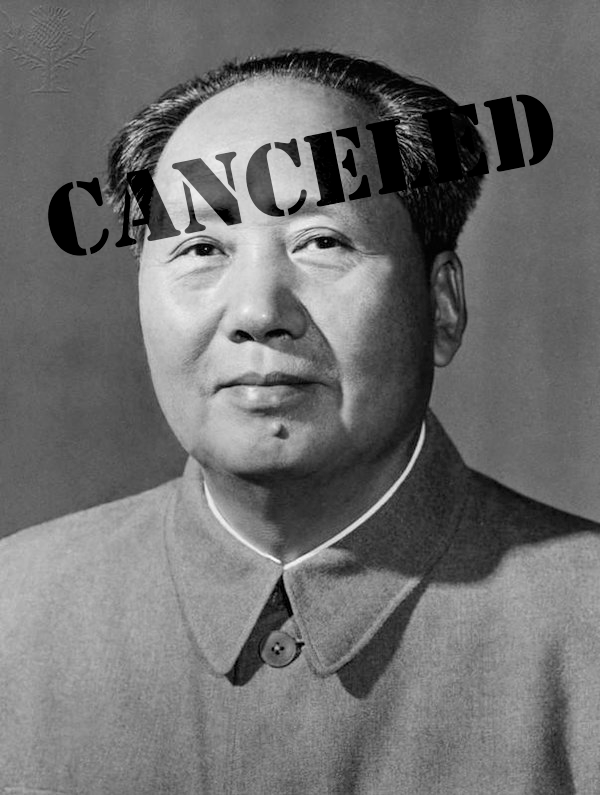
In the late 1960s, a new discursive formation became hegemonic around the world among many students, BIPOC, and colonized people, namely Maoism. One of the main seductions of Maoism was the so-called mass line, presented as a method of leadership wherein its practitioners take the scattered ideas of the masses, systematize them, and take them back to the masses in the form of policies to guide their struggle. It claims to be a way to fuse revolutionary leadership with the masses, and to be responsive to the masses’ desires, but in truth the mass line is an exercise in cultural appropriation.
The inventor of the mass line, Mao Zedong, was of the dominant Han people in China, and he never learned to check his Han privilege. In his nearly fifty years as the “great helmsman” of the Chinese revolution (his title an embodiment of patriarchal sailor culture), Mao constantly took epistemes from poor peasants, oppressed nationalities, and women while never giving them their due intellectual property rights, justified in the name of the mass line. Worse yet, when Mao took his synthesis of those epistemes back to the masses, he never prefaced his speeches with a land acknowledgement. The “from the masses, to the masses” epistemology of the mass line is, in truth, just another form of colonial knowledge production.
The genealogy of Maoism is fraught with cultural appropriation and discursive domination. The mass line, with its systematizing impulse to order knowledge, rejects dialogic engagement and imposes normativity while obliterating difference. Under the discursive domination of Maoism, the masses of people in China may have risen out of poverty, oppressed nationalities may have gained equality, and women may have overturned feudal practices such as foot binding. But, judging by Mao’s analysis of the persistence of class struggle under socialism, they were all still caught up in the web of power relations, a fate arguably worse than the states of domination they were subjected to by feudal lords, foreign imperialism, Japanese occupation, and labor exploitation. What they needed was not Mao systematizing their highest aspirations and bringing them back to the masses in the form of policies for collective liberation, but the opportunity to live in difference, like they were before the Chinese Revolution came to victory in 1949, and to own their own epistemes and use them to build their brands, as Deng Xiaoping would later enable them to do.
Mao himself was from the intellectual class, but instead of continuing his studies, he decided to get to know poor peasants, and not for the purpose of fieldwork for an anthropology PhD dissertation. Mao should have stayed in his lane. Maybe then Chinese peasants would have stayed in their lane, and then the valuable work of Chinese intellectuals would not have been disrupted in the late 1960s and the subaltern would have been allowed to speak. Forcing those intellectuals—and sending students—into the fields to do manual work was a form of biopolitics, with the body subjected to the rationalization of labor, and criticism/self-criticism sessions were nothing but a “from the masses” form of panopticon’s gaze. The outcome of this so-called Great Proletarian Cultural Revolution was disastrous: think of how many more PhD dissertations could have been written, how much could have been added to the discourse, if all those Chinese students hadn’t gone to the countryside in the late 1960s in a misguided attempt to practice the mass line? In conclusion:
Down with the mass line and its imposition of normativity!
Let a hundred epistemes bloom their truths and a hundred discursive formations live in difference!
The author of this guest editorial, Rhea Lee DuBaulugh-Oak, is a PhD candidate in the Foucauldian Studies department at the University of California – Los Angeles. During the Spring 2024 police and vigilante assaults on campus protests against Israel’s genocidal war on Gaza, she focused on self-care because she was at capacity and felt traumatized. DuBaulugh-Oak’s PhD dissertation, which she hopes to make a work of praxis, explores the intersectionality of getting prestigious faculty positions at Ivy League universities and not speaking out against a genocide, focusing on the career of Kimberlé Crenshaw.
 Going Against the Tide: A journal charting a path for communist revolution in the US