
OCR Leadership
October 2024
In the first few years of the Organization of Communist Revolutionaries’ existence, we have led the production of a significant body of theoretical and analytical writings (published in kites and now in Going Against the Tide), which was crucial to attracting and training an initial wave of new communist cadre and providing strategic guidance to their political work. We have also led wide-ranging agitation and exposure in various forms (leaflets, posters, street agitation, social media posts, etc.) around a number of class contradictions and political questions, which has been central to mass work under our organization’s leadership. Both our agitation/exposure and our theoretical/analytical work need to continue, expand, and rise to new heights. Between theory and agitation, however, lies a crucial “mid-level” that communists call propaganda. The OCR has reached the point in our development, with dozens of people actively under our leadership, hundreds in our orbit, and reaching (if not directly organizing) thousands more with our agitation and mass organizing efforts, that consistently developing the mid-level of propaganda at a higher level is now a pressing task.
The bourgeois definition of propaganda that makes its way down to popular consciousness is content used, for nefarious or manipulative purposes, to convince people of a (dangerous) political viewpoint. Where there is a shred of truth in this definition when it comes to communist propaganda is that we are trying convince the masses of the need for proletarian revolution and the socialist transition to communism, and that political viewpoint is dangerous to bourgeois rule. However, when communists use the specific term propaganda, we are referring to political content we produce that deepens the masses’ proletarian class-consciousness and systematically trains them in the communist world outlook. Our propaganda is distinguished from our agitation in that the role of the latter is to spark and sustain people’s political consciousness through exposure and sometimes mobilize them based on that exposure with a call to action, whereas the former goes in depth into a particular contradiction or set of contradictions from different angles, consolidating its audience in the communist world outlook over time.
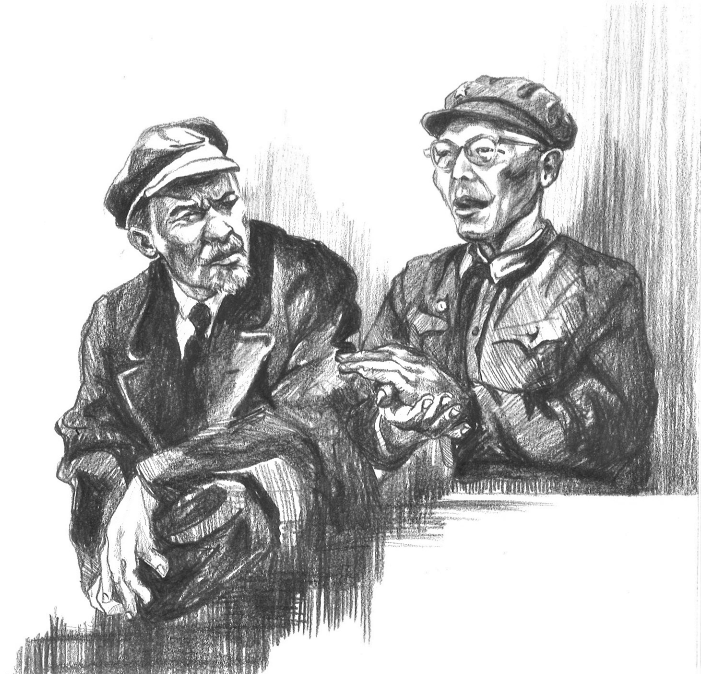
All the great strategic leaders of the international communist movement attached great importance to the role of consciousness in the revolutionary process, from Lenin and his landmark writing What Is To Be Done? to Mao’s emphasis on ideological remolding. While our aim is to transform the material conditions of society by overthrowing capitalism and, after that, through the socialist transition to communism, consciousness is what guides that material transformation. Moreover, consciousness is the variable on which our subjective efforts can have the most transformative impact. Even with the bourgeoisie in power, and even when mass resistance movements fail in their specific objectives or fade away, we can advance the proletarian class-consciousness of the masses if we are effective propagandists through all the twists and turns, highs and lows, of the class struggle. And those advances in the proletarian class-consciousness of the masses can in turn become a material force, guiding how the masses respond to and exercise their agency in the unfolding of contradictions in society.
For communist cadre to become effective propagandists requires specific training and experience in the art of propaganda, not off to the side of the class struggle but in the thick of it. Becoming effective propagandists has become an urgent task for OCR cadre given that we are now practically leading growing numbers of people, who require communist propaganda to deepen their initial political consciousness, and stepping into more and more spheres of class struggle and a wider range of raging political questions in society. With the goal of training propagandists in mind, in what follows, we’ll lay down the high standards our propaganda should live up to and address the particularities of the two main forms our propaganda will take: written and spoken.
What gives our propaganda its transformative power?
Propaganda work has too often been understood as simply “political education” and treated as something off to the side of the main political work of mobilizing the masses in class struggle. In reality, propaganda is an indispensable part of providing communist leadership. Through “case studies,” propaganda answers the important “why?” and “how?” questions, namely why capitalism perpetuates exploitation and oppression and how that exploitation and oppression can be done away with through proletarian revolution. These “case studies” resonate with the masses because their specific topic is something the masses experience directly (the failings of the healthcare system under capitalism, for example), observe in the world around them (such as imperialist wars of aggression or ecological devastation), or are debating out among each other (whether the latest wave of migrants is to blame for their own lack of access to resources, for example).
Importantly, our approach to selecting topics for propaganda is not one of limiting our propaganda work to topics pertaining to the exploitation and oppression that the audience in question experiences directly. Instead, which topics we prioritize should be based on our summation of our overall interactions with the masses, with our strategic objectives in mind. We should be identifying the questions the masses are asking, their advanced and backward sentiments, the ideas that are holding them back from becoming a revolutionary people, and the areas in which we need to and can transform their consciousness. Certainly any mass organizing effort or campaign we take up will need propaganda for the advanced addressing the specific contradiction we are leading struggle around, but our propaganda work should be far broader than the needs of the practical struggles we are leading.
Whatever the topic of the particular propaganda, the important thing is that our propaganda gives the masses a compelling explanation that answers the “why” and “how” questions. To accomplish this, our propaganda must center the contradiction(s) at the core of the topic, not just present lots of exposure and then tack on “and that’s why we need revolution” at the end. The audience for our propaganda should be brought to our intended conclusion through gaining an understanding of the contradiction(s) in question, which will require us to provide sufficient factual information and analyze that information with materialist dialectics. This method is the difference between producing engaging propaganda with the power to convince vs. making lots of proclamations while failing to connect the facts with the conclusions.
Some propaganda will be mainly about using exposure to unfold a communist analysis of a particular contradiction of capitalism, while other propaganda will also address questions of ideological stand bound up with that contradiction. For example, when we address backwards ideological manifestations of the social war for survival among the masses (such as blaming migrants, LGBT people, the homeless, youth, etc. for social problems), we need to expose the bourgeois lies behind the blame game while also challenging the ideological stand that makes some masses susceptible to those bourgeois lies. In other words, if a US-born proletarian is blaming migrants for their problems, we need to both explain, factually, why the bourgeoisie rather than migrants is to blame for those problems and challenge the national chauvinism and me-first ideology in their outlook. Our propaganda is at its best when it manages to do political and ideological work all at once while also training the masses to think like dialectical materialists.
Written propaganda
A pamphlet or a medium-length article, around 2–3,000 words in length, divided into sections with subheadings, are the usual forms that our written propaganda will take. When our propaganda uses communist terminology unfamiliar to a mass audience, we should be sure to give brief explanations of the necessary terms. But our written propaganda should not overly rely on communist terminology—it should strike the right balance between an analytical tone and a style that connects well with proletarian masses. This is a little different than agitation, which should be more in the everyday language of the masses.
Written propaganda is at its best when it unfolds the contradiction(s) at the heart of its topic in ways that draw the masses towards its conclusions. Its organization into sections should facilitate this process of unfolding, and ideally the reader should have a sense of different threads coming together. While written propaganda should make good use of facts, including statistics, it should not overload the reader with facts, instead picking and ordering the information in the ways that will best pinpoint and explain the contradiction(s) in question.
A 2–3,000 word piece of written propaganda cannot address every aspect of the topic, but it should strive to address various dimensions and draw out the totality of the contradiction. For example, the oppression of women is a thread that runs through the entire workings of capitalism. It’s not a requirement that all our propaganda address the oppression of women, but touching on how a particular contradiction affects the oppression of women is often necessary and desirable and can deepen the masses’ understanding of the total bankruptcy of bourgeois rule.
In matters of literary style and tone, our propaganda writers should develop their unique voices, and combat any tendencies towards robotic or wooden stereotyped communist writing. Within the diversity of literary voices we must cultivate, however, there are a few general guidelines to keep in mind when writing propaganda: We should convey our heart for the masses and hatred for the system without sounding hippy-dippy or histrionic. We should rely on facts to expose the workings of capitalism, but not sound like dispassionate, detached sociologists. We should work to raise the intellectual level and standards of the masses by drawing attention to the evidence for the claims we are making and drawing the masses into dialectical materialist methods of thinking, and never be condescending towards the masses, even when we’re contending with backward ideas.
Spoken propaganda and leading through prop sessions
Propaganda in all forms is primarily intended for the advanced masses who are looking for, or at least open to hearing, answers and explanations, from a communist perspective, for why the world is the way it is and how it can be transformed. Written propaganda, by the nature of its form, can be made available more broadly even as the intermediate and backward by and large won’t be motivated to read it in “normal times.” Spoken propaganda—the oral presentation that opens what communists call prop sessions—by its nature will be for captive audiences of specific groups of people. These could be members of activist and mass organizations under our leadership, cadre in the OCR, or people who come to a public event we hold. As such, spoken propaganda should be very specifically geared to the particular questions that are important to address for the audience in question.
With any group of people we’re leading, challenges and questions will come up in the course of the political work or class struggle they are engaged in. Prop sessions, where a specific group of people under our leadership are brought together for a presentation and discussion, are a way of answering and discussing those questions on a higher level, stepping above the details and minutiae of the day-to-day work. To do a good prop session, you first have to identify the key ideological, political, and strategic challenges or questions coming up in the practical work. Then you have to come up with a presentation addressing those questions, or better yet the key contradiction at the center of them, “from the mountaintop” of political line rather than from only the trenches of the practical work.
The presentation that begins a prop session should generally be in the 10–20 minute range and make for a good set-up for discussion. The presentation needs to identify the key contradiction(s) and provide some sense of how to resolve those contradictions. It should be delivered in a conversational style rather than as a declamatory speech (that latter has its place, but makes little sense in the context of a prop session), but we should strive to finish the presentation before the discussion starts. The style of presentation is bound up with the purpose of a prop session: to invite people into the process of understanding the contradiction(s) and figuring out its resolution.
Some prop sessions will be more theoretical, while others will be more strictly political, but of course there is no firm boundary separating these two types. An example of a more theoretical prop session: Some comrades are having trouble figuring out how to address the national question from a communist perspective among people they’re working with. A prop session on the national question would identify and go into the contradiction between upholding the right of nations to self-determination and the communist aim to get beyond nations to communism, and would pick examples to focus on based on the specific questions coming up in the political work (policies implemented in multinational socialist states, the differences between communist and Black nationalist political solutions to the oppression of Black people, etc.). More theoretical-minded prop sessions are the bread and butter of the recruitment process into the OCR, and should become common, collective practice among those directly and actively under our leadership.
An example of a more strictly political prop session: Some proletarians in a mass organization are having trouble convincing their neighbors that instead of complaining to government officials and expecting them to fix their problems, we need to bind together and take collective mass action. A prop session would get into why, in relation to this specific contradiction, the government officials cannot and will not solve the masses’ problems, and will only be forced to take action if the masses step outside of the official channels, and how the masses can take that collective action. It may use some historical examples, outside of the particular contradiction, to show how this has been done in other circumstances, and it may tie the particular contradiction to the more general workings of capitalism, but without losing the main focus. More strictly political prop sessions should be the bread and butter of meetings of mass and activist organizations under OCR leadership.
Whatever particular prop sessions are necessary in our political work, the overarching point is that conducting prop sessions should be central to how we lead people—they are a crucial means to transform people’s consciousness so that they can transform the world. The emphasis we attach to prop sessions as a method of leadership is a key difference between, in Lenin’s words, leading as “tribunes of the people” vs. leading as “trade-union secretaries.” The latter is at best an able administrator, taking care of the practical problems of the class struggle and doling out tasks to those they lead. The former should certainly pay attention to the practical problems, but should look at those problems from the mountaintop of political line and rely on the conscious initiative of the masses to solve them, while bringing up more and more of the advanced masses to the mountaintop with them, with prop sessions as a crucial part of that process.
Other potential forms for propaganda
We gave specific attention to the two tried and tested forms of communist propaganda: written pamphlets and articles, and oral presentations at prop sessions. However, we should also consider other forms communist propaganda might take today, from short documentary films to digital presentations making use of graphics to illustrate their analysis to podcasts and videos. Whatever the form, the mission of propaganda remains to deepen proletarian class-consciousness and address the key questions for moving the class struggle forward, and experimenting with new forms should not detract from that mission or lower our proletarian intellectual standards. Facility with the various forms of propaganda is certainly part of being a skilled propagandist, but the art of communist propaganda is above all about addressing the contradictions in a compelling way from a thoroughly communist perspective with the goal of transforming the consciousness of the masses.
 Going Against the Tide: A journal charting a path for communist revolution in the US